
Nickel Market Outlook and Key Drivers (2026)
- Feb 9
- 3 min read
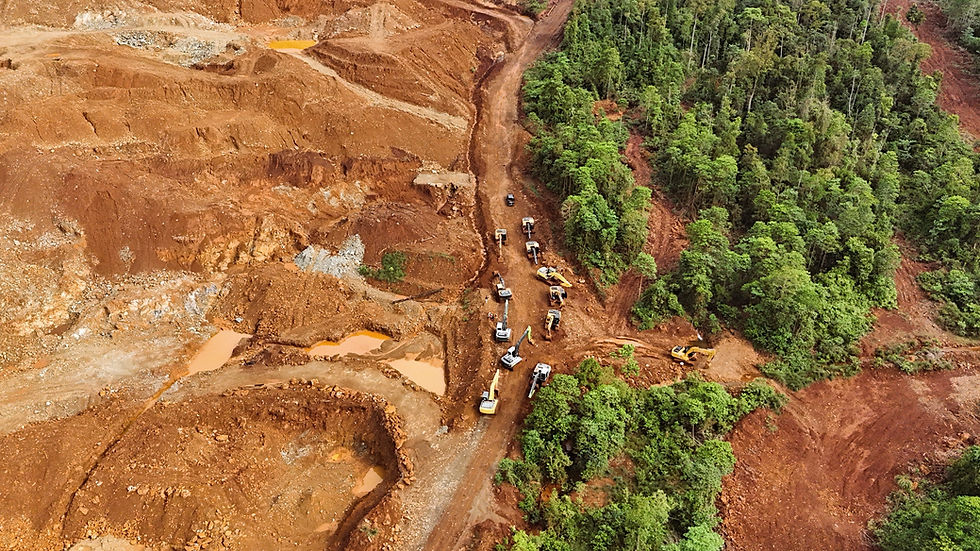
The global nickel market has entered a new phase in 2026, shaped less by traditional supply scarcity and more by geopolitical strategy, policy-driven trade flows, and financial speculation. Once considered a classic industrial metal tied closely to stainless steel production, nickel has increasingly become a strategic commodity due to its role in electric vehicle (EV) batteries and the broader critical minerals supply chain. The nickel’s recent market volatility is not random—it reflects a structural shift in where nickel is produced, how it is traded, and how investors perceive its future.
Indonesia’s Dominance Reshapes the Global Nickel Market
One of the most important developments is Indonesia’s continued rise as the world’s most influential nickel supplier. The nickel market has become heavily dependent on Indonesia’s ore production, processing expansion, and export policy decisions. Indonesia is no longer simply a raw ore supplier; it has increasingly built downstream capacity, producing nickel pig iron (NPI), nickel matte, and mixed hydroxide precipitate (MHP), which are key inputs for stainless steel and battery chemicals.
The worksheet highlights how nickel prices are now effectively “playing Indonesia’s numbers game.” This means the market reacts strongly to signals about Indonesian production levels, refinery expansions, and potential government intervention. Any policy shift—such as export restrictions, new taxes, or domestic processing requirements—can ripple through global prices immediately. As Indonesia continues to expand output faster than demand growth, the world nickel market risks remaining structurally oversupplied in the short-to-medium term.
China’s Nickel Exports and Market Influence
China remains the dominant consumer and processor of nickel, but China has also become a major exporter of refined nickel products. Record refined nickel exports suggest China is not only absorbing nickel for domestic industry, but also redistributing supply into global markets. This reinforces China’s central position in the nickel value chain.
China’s influence is further strengthened by the rapid development of its futures markets. China is moving to open its nickel and lithium futures contracts to foreign investors. This is significant because it suggests China wants to increase global participation in its commodity exchanges, potentially increasing liquidity and positioning Chinese pricing benchmarks as more globally relevant. Over time, this could challenge the dominance of the London Metal Exchange (LME) as the primary global nickel pricing hub.
Speculation and Financial Flows Are Increasing Price Volatility
Nickel has become part of this broader investor narrative. This financial-driven demand can temporarily overwhelm physical fundamentals. Even if stainless steel and EV battery demand are stable, aggressive buying by speculators can push prices sharply higher. However, such rallies may not be sustainable if inventories remain sufficient and supply growth continues. This creates a market environment where nickel prices can swing violently, not because the physical market is tight, but because investors are trading the story of future scarcity.
Nickel as a Strategic Critical Mineral
Nickel is connected to broader national security concerns. Critical mineral stockpile discussions emphasize that many economies could face supply vulnerabilities during geopolitical disruptions. Nickel’s inclusion in these conversations reflects its importance in both civilian and defense-related manufacturing.
Even if nickel is currently abundant due to Indonesian production growth, governments increasingly view secure nickel supply as strategic infrastructure. This creates a paradox: the physical market may show oversupply today, but the political market is pricing in long-term scarcity risk and supply-chain fragility.
Outlook: Structural Oversupply vs. Strategic Demand Growth
The nickel market in 2026 sits at the intersection of two opposing forces. On one hand, Indonesia’s rapid production growth and China’s export capacity suggest that global supply remains strong, limiting the probability of sustained shortages in the near term. On the other hand, long-term demand growth from EV batteries, energy transition infrastructure, and defense supply chains continues to support bullish sentiment.

Comments